


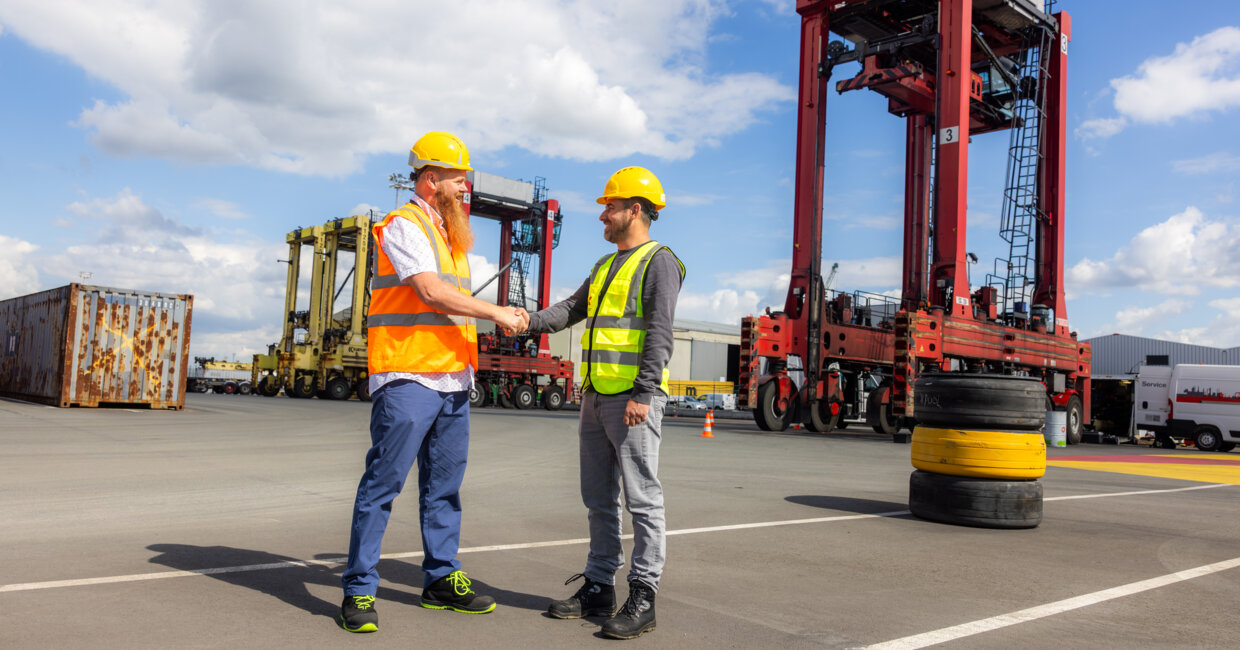
Building skills that keep ports moving: OCHA and Kalmar’s 20-year partnership
Before a new operator takes control of a straddle carrier on a busy terminal, there is a lot to learn.
At Opleidingscentrum voor Havenarbeiders (OCHA), the training centre for port workers in the heart of the Port of Antwerp, trainees build the practical skills they need to work safely and confidently in the port. The training combines simulation, hands-on practice and experience on the terminal, helping operators progress step by step towards real port operations.
“Port work is really a profession, and the port is a unique working environment,” says Geert De Bondt, Supervisor Operations at OCHA. “That is why it is important that people can first practise their skills in a realistic environment.”
Port work is really a profession, and the port is a unique working environment. That is why it is important that people can first practise their skills in a realistic environment.
From simulation to the terminal
The straddle carrier programme is designed to build skills gradually. Trainees begin with one week on a simulator, followed by two weeks of practical training with a real straddle carrier at OCHA’s training site. They then spend three weeks on a terminal, working under the guidance of an experienced mentor.
The training journey
Simulator
1 week
Learning the basics in a safe environment.
Practical training
2 weeks
Building practical skills with a real straddle carrier.
Terminal experience
3 weeks
Working alongside an experienced mentor.
The simulator provides a safe starting point for learning the basics of operating a straddle carrier and dealing with different situations. “In the simulator, trainees can first become familiar with operating a straddle carrier in a calm and safe environment,” Geert explains. “They can practise different situations, such as heavy traffic, unexpected circumstances or bad weather.”
In the simulator, trainees can first become familiar with operating a straddle carrier in a calm and safe environment
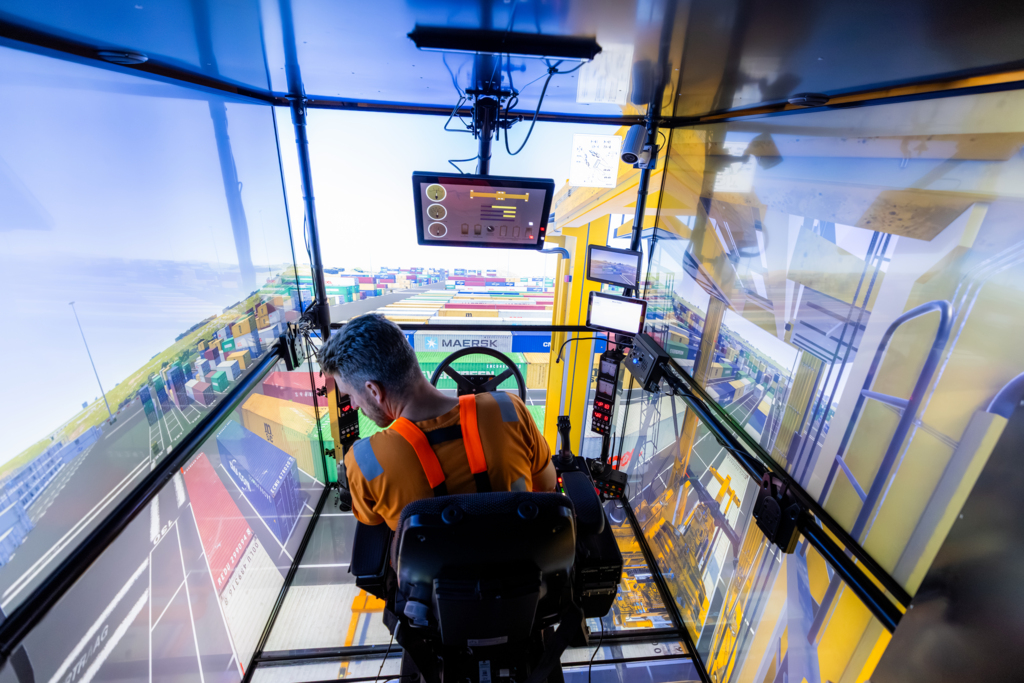
Trainees begin their straddle carrier training in a simulator, practising different operating situations in a secured environment.
The ability to practise without consequences is an important part of the learning process. “Mistakes become learning moments, without consequences for people, equipment or operations. Once the basics are in place, they move on to a real straddle carrier at our training site. This allows us to start the practical training more safely and in a more focused way.”
Mistakes become learning moments, without consequences for people, equipment or operations.
After completing their final assessment, operators can work independently, while continuing to receive support from a coach during their first six months.
Keeping training close to the reality of the port
OCHA’s role extends beyond teaching people how to operate individual machines. As the port changes, the skills needed by its workforce change too. That means preparing the next generation of port workers with a combination of technical skills and the broader capabilities needed to work effectively in a complex environment.
“It is important to teach the next generation of port workers not only technical skills, but also safe behaviour, cooperation, communication and a sense of responsibility.”
It is important to teach the next generation of port workers not only technical skills, but also safe behaviour, cooperation, communication and a sense of responsibility.
For OCHA, this is also about helping people continue developing throughout their careers. Alongside initial training, experienced port workers return for additional training and refresher courses, allowing them to stay up to date as technology and working methods evolve.
A partnership spanning more than 20 years
OCHA has trained straddle carrier operators with Kalmar equipment since 2003. Today, its fleet includes five Kalmar straddle carriers, with two new hybrid machines due to arrive towards the end of 2026.
2003
Training operators with Kalmar equipment since
5
Kalmar straddle carriers in the fleet today
+2
New hybrid machines delivered in the beginning of November.
“It is important that our training programmes are as closely aligned as possible with reality on the terminals in the port,” says Geert De Bondt, Supervisor Operations at OCHA.
More than two decades later, that connection to the reality of the port remains at the heart of the partnership. As equipment and technologies continue to evolve, the two organisations are continuing to develop the training environment alongside them.
“Our long-standing cooperation with OCHA is a great example of how close collaboration with customers can evolve alongside the industry,” says Damien Cols, Director Global Customers, Kalmar. “As equipment and technologies change, it is important that training environments keep pace, and we are pleased to support OCHA as it prepares the next generation of port professionals.”
As equipment and technologies change, it is important that training environments keep pace, and we are pleased to support OCHA as it prepares the next generation of port professionals.
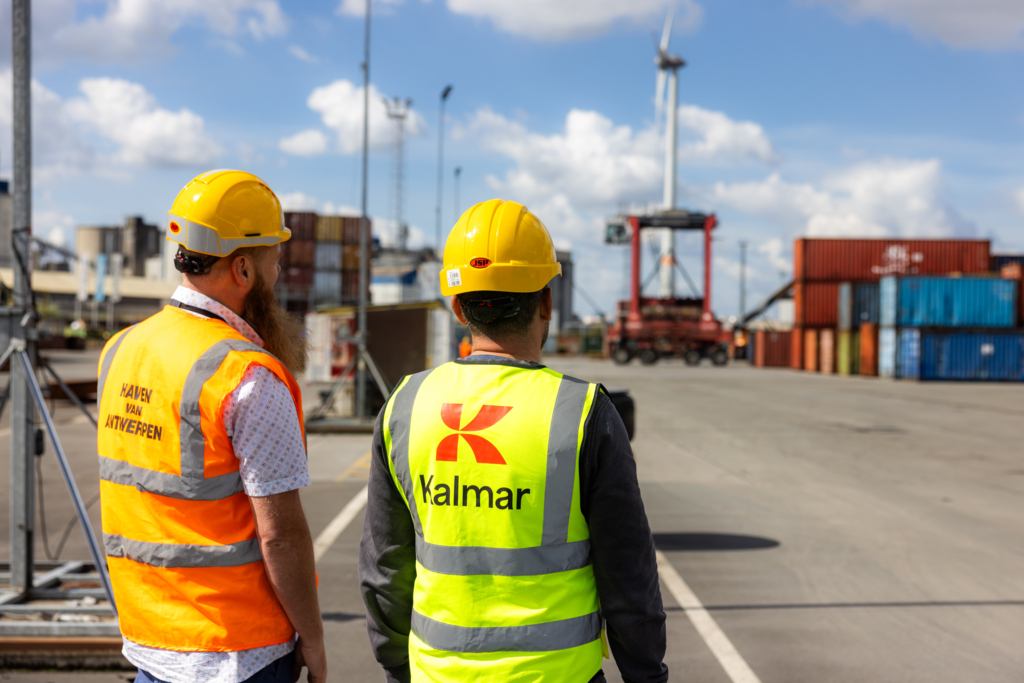
OCHA and Kalmar have worked together for more than 20 years to keep training aligned with the evolving needs of port operations.
Reliability is another important part of the relationship for OCHA, with the machines in daily use and training time at a premium.
“For us, reliability and service are very important. Our training takes place every day, so if a machine breaks down, we want to be able to continue as quickly as possible.”
For us, reliability and service are very important. Our training takes place every day, so if a machine breaks down, we want to be able to continue as quickly as possible.
Kalmar’s proximity to OCHA in Antwerp also helps ensure support can be provided quickly when needed. Alongside reliability, OCHA sees a shared focus on quality, safety and technological innovation as important pillars of the long-standing relationship.
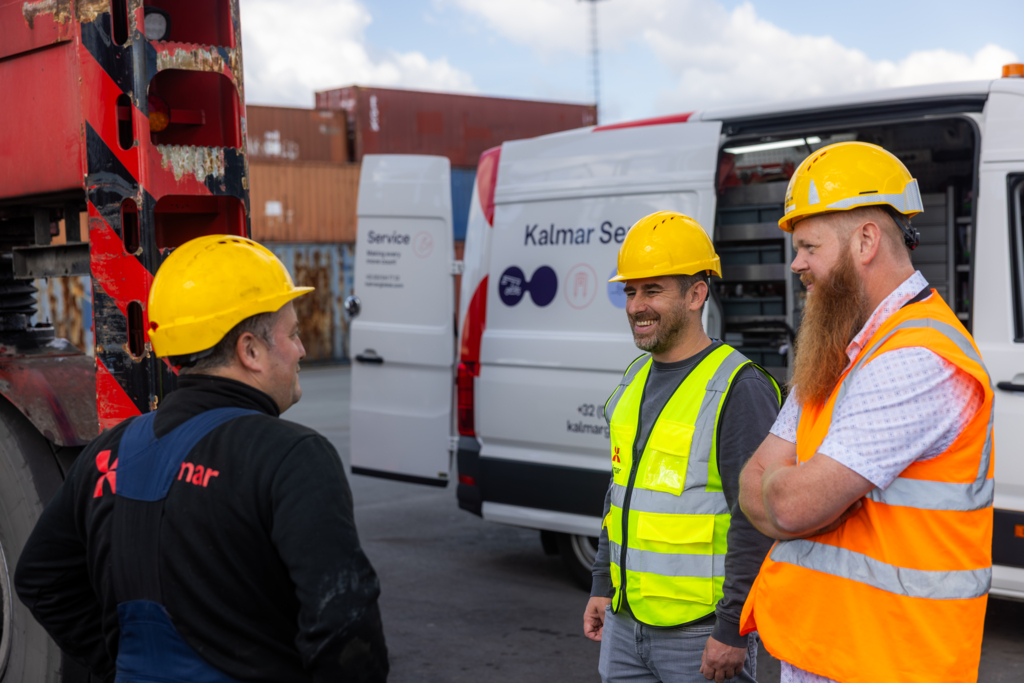
Kalmar services keep OCHA’s training fleet running reliably for daily operator training.
Training for the machines of tomorrow
The arrival of the new hybrid straddle carriers will give trainees hands-on experience with the latest generation of equipment and help bring the port’s transition towards more sustainable technologies into the training environment.
“There remains a strong demand for well-trained straddle carrier drivers, and that is why we want to train them on modern machines that are as close as possible to what they will encounter on the terminals,” Geert says.
For OCHA, keeping pace with changing technology is an essential part of preparing operators for their future roles.
“As a training centre, we need to follow that evolution, so that drivers are already learning to work with the machines of tomorrow.”
As a training centre, we need to follow that evolution, so that drivers are already learning to work with the machines of tomorrow.
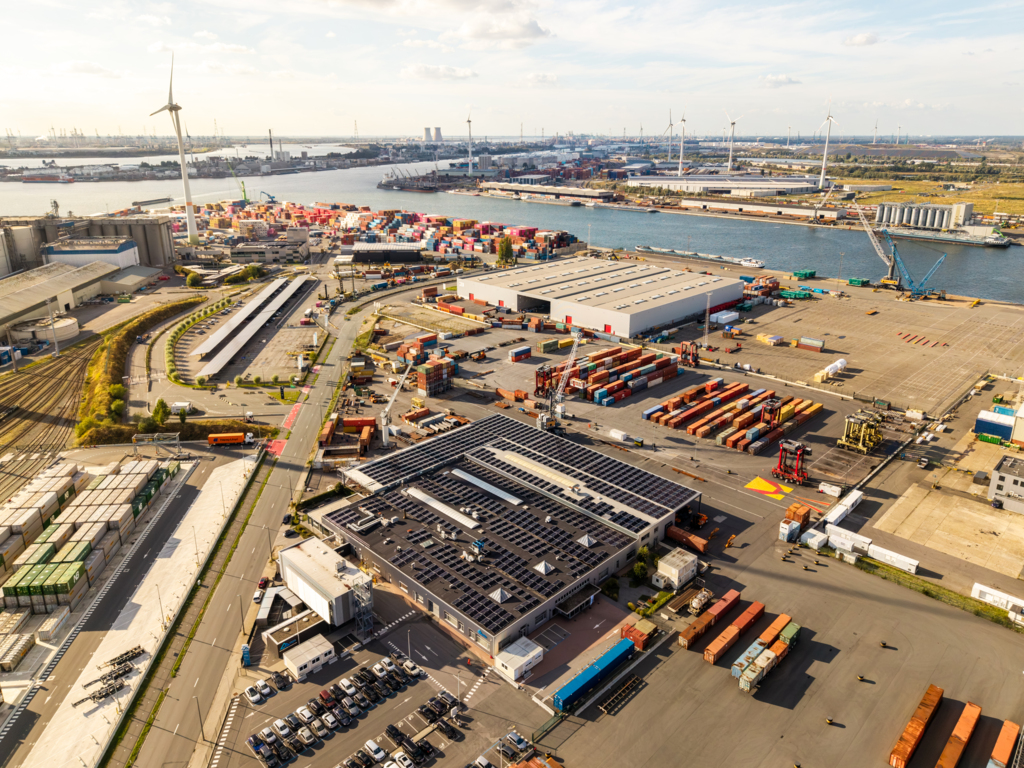
OCHA’s training centre in the Port of Antwerp provides a practical environment for developing the skills needed in modern port operations.
Related articles
Further reading
Subscribe and receive updates in your email
Subscribe